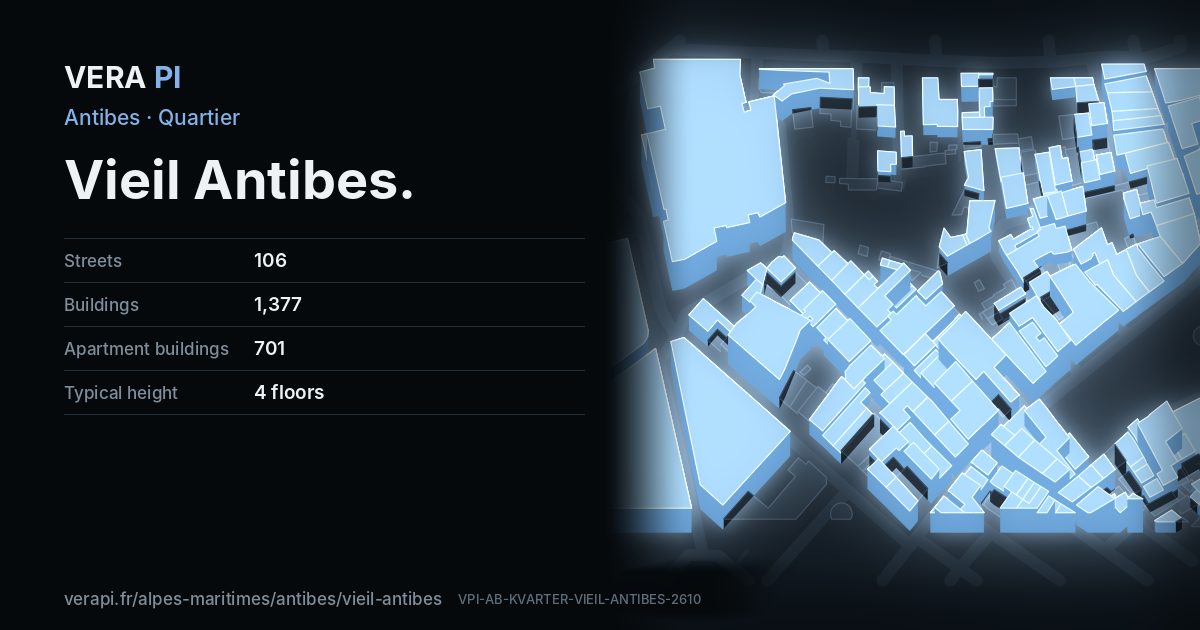
About Vieil Antibes
Vieil Antibes sits on the rock of the ancient town, between the port and the sea wall. Its spine is the Cours Masséna – the medieval «Bourgade», renamed in 1860 – where the Marché Provençal opens under a metal hall of 1928 every morning, except Mondays from September to May. Up the steps, the Château Grimaldi holds the Musée Picasso, beside the cathedral and its Saracen tower.
South of the market, the Safranier, a «free commune» since 1966, keeps its own village life between the Rue de la Tourraque and the Rue du Haut-Castelet; the Greek writer Nikos Kazantzakis lived there. On the Place Nationale, the Musée Peynet stands beside a Carrara marble column of 1818, and the Chapelle Saint-Bernardin of the White Penitents, raised in the sixteenth century on Roman foundations, keeps its sixteenth-century frescoes. Along the sea, Nicolas de Staël painted in a house on the ramparts from September 1954 to March 1955.
Text: Metro Mode. Sources: Office de Tourisme – Antibes step by step; Office de Tourisme – The markets; Office de Tourisme – Antibes, la cité des remparts; Wikipédia – Chapelle Saint-Bernardin d’Antibes.
Vieil Antibes on the map
What to see in Vieil Antibes
 Antibes Cathedral (Notre-Dame-de-l’Immaculée-Conception)Antibes was a bishopric from the fifth century until 1244, and its former cathedral – also called Notre-Dame-de-la-Platea – is still the largest church in town.Olivier2000 · CC BY-SA 1.0 · Wikimedia CommonsTour Grimaldi (the Saracen tower)The square tower beside the cathedral – the «Saracen tower» of the old town’s walks – is listed with the church and the Chapelle Saint-Esprit as one historic monument.Chapelle Saint-BernardinThe chapel of the White Penitents of Saint Bernardine stands on Roman foundations; local historians date it to 1513 or 1581, and its walnut side door carries the date 20 March 1581.
Places
Sights
- Antibes Cathedral (Notre-Dame-de-l’Immaculée-Conception)Church · Promenade de l'Amiral de Grasse
- AntibéaTheatre · Rue Georges Clemenceau
- Cathédrale Notre-Dame-de-la-Platea, chapelle Saint-Esprit et tour GrimaldiChurch · Rue Saint-Esprit
- Chapelle Saint-BernardinChurch · Rue du Docteur François Delmas
- Chapelle Saint-Esprit d'AntibesChurch · Rue des Arceaux
- Chapelle Saint-Sauveur d'AntibesChurch · Rue Arazy
- Château des GrimaldiPalace · Promenade de l'Amiral de Grasse
- CineplanetCinema · Rue Lacan
- Fontaine de VenceBuilding · Rue Georges Clemenceau
- Galerie ClémenceauGallery · Cours Masséna
- La Colonne à la MerArtwork · Promenade de l'Amiral de Grasse
- Lavoir de la TourraqueAttraction · Rue du Lavoir
- Le DéfiArtwork · Promenade de l'Amiral de Grasse
- Le jardin d'édenArtwork · Rue Lacan
- Le TribunalTheatre · Place Amiral Barnaud
- Les amoureux sur talusArtwork · Rue Sade
- Les ArcadesGallery · Boulevard d'Aguillon
- Maison AtelierGallery · Rue du Docteur François Delmas
- Monument aux morts d'AntibesMonument · Rue Sade
- Musee de l'AbsintheMuseum · Rue Sade
- Musée de l'absintheMuseum · Cours Masséna
- Musée Peynet et du Dessin humoristiqueMuseum · Rue Sade
- Musée PicassoMuseum · Promenade de l'Amiral de Grasse
- Place Jacques AudibertiBuilding · Place Jacques Audiberti
- Place NationaleBuilding · Rue Sade
- Rue du BateauBuilding · Rue René Laporte
- Rue Saint-EspritBuilding · Rue Saint-Esprit
- Theâtre AntibéaBuilding · Rue Georges Clemenceau
- Théâtre d'AntibesChurch · Cours Masséna
- Tour Grimaldi (the Saracen tower)Tower and lighthouse · Rue Père Christian Chessel
- Uau ArtGallery · Rue Thuret
- Victor HugoArtwork · Promenade de l'Amiral de Grasse
Beaches and beach clubs
Eat & drink
- 32Restaurant · Rue des Casemates
- A serenaBar · Traverse Lacan
- Absinthe BarBar · Cours Masséna
- Al DenteFast food · Rue Lacan
- All Stars BurgerFast food · Rue Aubernon
- AmarenaIce cream · Rue Thuret
- AmorinoIce cream · Rue du Marc
- Amour CaféRestaurant · Rue des Revennes
- Ban Kai JaaRestaurant · Rue du Docteur Rostan
- Bangkok CaféRestaurant · Boulevard d'Aguillon
- Bar BacchusRestaurant · Cours Masséna
- Bistrot AntiboisRestaurant · Rue Championnet
- Bistrot du coinRestaurant · Rue de la Pompe
- Blue LadyPub · Boulevard d'Aguillon
- Cafe CosyCafé · Rue du Migrainier
- caffè MilanoCafé · Rue de la Tourraque
- Café BrunCafé · Rue Aubernon
- Café des ChineursRestaurant · Rue Aubernon
- Café L'amirautéCafé · Place Amiral Barnaud
- Café LacanCafé · Rue de la République
- Café MariusCafé · Place Nationale
- Café MiloCafé · Rue Georges Clemenceau
- Casa AzulRestaurant · Rue Aubernon
- Casa Gi!Fast food · Rue James Close
- Casa SaporiRestaurant · Rue Lacan
- ChamkilaRestaurant · Rue Sade
- Chez JoëlleCafé · Rue Fourmillère
- Chez les fillesRestaurant · Rue de la République
- Chez MargueriteRestaurant · Rue Sade
- Chez NandoRestaurant · Rue des Casemates
- Choopy’s Cupcakes & Coffee ShopCafé · Rue du Marc
- Copenhagen Coffee LabCafé · Cours Masséna
- Crêperie du PortRestaurant · Rue Thuret
- Côté SushiRestaurant · Traverse Lacan
- Dennis Wines And FoodRestaurant · Rue de Fersen
- Don JuanRestaurant · Rue Thuret
- Emilie And The Cool KidsCafé · Place du Revely
- Entre 2 VinsRestaurant · Rue James Close
- EuphorieRestaurant · Rue des Casemates
- FalafelFast food · Rue Aubernon
- FerniRestaurant · Rue de la République
- FranketteRestaurant · Rue du Migrainier
- Froggy GourmetRestaurant · Rue Aubernon
- Gelateria del PortoIce cream · Rue Aubernon
- Gelateria del PortoIce cream · Rue Georges Clemenceau
- Gelateria ItalianaIce cream · Place Nationale
- GelatissimoIce cream · Rue de la République
- Gelato RepublicIce cream · Rue Fourmillère
- Good MateCafé · Rue Georges Clemenceau
- GooodRestaurant · Rue Fourmillère
- GustoRestaurant · Place Malespine
- Happy FaceBar · Traverse des Palmiers
- HauroraCafé · Rue Georges Clemenceau
- Healthy LoungeCafé · Rue James Close
- Häagen-DazsIce cream · Rue Lacan
- JeanneRestaurant · Rue Sade
- Jojo's DoughCafé · Rue Georges Clemenceau
- KathCafé · Rue de la République
- Kebab IstanbulFast food · Rue Fourmillère
- Krispy KornetFast food · Rue James Close
- KruzCafé · Rue des Casemates
- L'AnnexeRestaurant · Boulevard d'Aguillon
- L'ArazurRestaurant · Rue des Palmiers
- L'ArdoiseRestaurant · Rue de la République
- L'armoiseRestaurant · Rue de la Tourraque
- L'Artigiano ItalianoFast food · Place Malespine
- L'Elephant BleuRestaurant · Rue des Casemates
- L'EndroitBar · Rue Aubernon
- L'OursinRestaurant · Rue de la République
- L'Écureuil EspagnolRestaurant · Rue Fourmillère
- L'ÉvidenceBar · Boulevard d'Aguillon
- L'île BleueRestaurant · Rue Sade
- La BadianeRestaurant · Traverse du 24 Août
- La Cafetière FêléeRestaurant · Rue du Marc
- La CascadeRestaurant · Rue Sade
- La Civette du MarcheBar · Rue Sade
- La clé de la PorteRestaurant · Rue Aubernon
- La Côte à l'OsRestaurant · Rue James Close
- La FabriqueBar · Boulevard d'Aguillon
- La Fée LocaRestaurant · Rue Fourmillère
- La GravetteRestaurant · Boulevard d'Aguillon
- La GuinguetteRestaurant · Rue Sade
- La Guinguette De RioRestaurant · Boulevard d'Aguillon
- La Guinguette Du TigreRestaurant · Boulevard d'Aguillon
- La Maizon du MarchéFast food · Rue Sade
- La Petite EscaleRestaurant · Rue Fourmillère
- La PiazzaRestaurant · Rue de la République
- La Rôtisserie du MarchéFast food · Rue Georges Clemenceau
- La Taille de GuêpeRestaurant · Rue de Fersen
- La TerrasseCafé · Rue Miquelis-Raybaud
- La Tour AntiqueRestaurant · Rue de la Tourraque
- Le 16Bar · Boulevard d'Aguillon
- Le 22Restaurant · Rue de la République
- Le Bistrot des JulesRestaurant · Rue Thuret
- Le Bistrot ItalienRestaurant · Rue des Palmiers
- Le Brooklyn SushiRestaurant · Rue Thuret
- Le BrulotRestaurant · Rue Frédéric Isnard
- Le Brulot PastaRestaurant · Rue Frédéric Isnard
- Le ChampionnetRestaurant · Cours Masséna
- Le ChaudronRestaurant · Rue Sade
- Le ChronoRestaurant · Rue James Close
- Le comptoirRestaurant · Rue de la Tourraque
- Le Coq GalloisRestaurant · Rue Aubernon
- Le César CaféRestaurant · Rue Aubernon
- Le Figuier de Saint-EspritRestaurant · Rue Saint-Esprit
- Le Figuier de St EspritRestaurant · Rue Saint-Esprit
- Le FricotRestaurant · Traverse du 24 Août
- Le Glacier d'AntibesIce cream · Rue Fourmillère
- Le Goût - ThéRestaurant · Traverse des Palmiers
- Le KashmirRestaurant · Rue Thuret
- Le P'tit CageotRestaurant · Rue du Docteur Rostan
- Le PatioRestaurant · Rue des Bains
- Le PiccolinoRestaurant · Cours Masséna
- Le Pin ParasolCafé · Traverse du 24 Août
- Le Relais Du PostillonRestaurant · Rue Championnet
- Le RusticRestaurant · Impasse James Close
- Le SafranierRestaurant · Rue du Safranier
- Le Tire BouchonRestaurant · Place Nationale
- Le VaubanRestaurant · Rue Thuret
- Le Vert GalantCafé · Boulevard d'Aguillon
- Le Vieil AntibesCafé · Rue Thuret
- Le VillageRestaurant · Rue James Close
- Les 3 GlacesIce cream · Rue Thuret
- Les Filles du MicocoulierRestaurant · Cours Masséna
- Les Vieux MursRestaurant · Promenade de l'Amiral de Grasse
- Luma BarBar · Rue des Palmiers
- Mama boonRestaurant · Rue des Revennes
- MamaluRestaurant · Cours Masséna
- Margaret CaféFast food · Rue de la République
- Mellow FactoryRestaurant · Rue Sade
- Melting PotFast food · Rue Aubernon
- MerseaRestaurant · Cours Masséna
- MiamRestaurant · Rue Thuret
- Michelangelo “MAMO”Restaurant · Rue des Cordiers
- MistinguettRestaurant · Boulevard d'Aguillon
- Momento Da SalvoRestaurant · Rue Fourmillère
- MonamùFast food · Rue Aubernon
- MoonshineRestaurant · Rue des Palmiers
- MordusRestaurant · Rue Frédéric Isnard
- NacionalRestaurant · Rue de la République
- NananèreRestaurant · Avenue Paul Doumer
- PabloPub · Place Jacques Audiberti
- PaninoRestaurant · Traverse du 24 Août
- Papanico'sRestaurant · Boulevard d'Aguillon
- Passion GlacesIce cream · Rue Georges Clemenceau
- Pasta e BastaRestaurant · Rue Thuret
- Pimm'sCafé · Rue Miquelis-Raybaud
- PipernoRestaurant · Rue Fontvieille
- Poke MamaFast food · Rue de la République
- PommodoroRestaurant · Rue du Migrainier
- PonzoFast food · Rue Thuret
- Restaurant Le ZincRestaurant · Cours Masséna
- Restaurant Pizzeria Da CitoRestaurant · Cours Masséna
- Salé SucréRestaurant · Rue de Fersen
- Saveurs d'AsieFast food · Rue de la République
- SistersBar · Rue Fontvieille
- TartineFast food · Rue Aubernon
- TeagréCafé · Rue Fourmillère
- The BrooklynRestaurant · Rue Thuret
- The Drinker's clubBar · Rue Aubernon
- The Hop StorePub · Rue des Casemates
- The Queen MaevePub · Boulevard d'Aguillon
- Troquet Des MilliardairesBar · Place Malespine
- Will FoodFast food · Rue Lacan
- Yogurt FactoryIce cream · Traverse Lacan
- YukoBar · Boulevard d'Aguillon
Hotels
- Backpackers House AntibesHostel · Rue des Casemates
- Charmant Studio Vieil AntibesAparthotel · Rue du Haut Castelet
- Crew Grapevine PortsideHostel · Rue de La Baume
- Crew Grapevine SeasideHostel · Rue du Bas Castelet
- IrinHotel · Impasse Maurice Fantino
- Le CaméoHotel · Place Nationale
- Le Relais Du PostillonHotel · Rue Championnet
- Le Relais du PostillonHotel · Rue Championnet
- Modern HotelHotel · Rue Fourmillère
Shops
- 1 2 3 SoleilGift · Rue James Close
- 69 slamClothes · Rue Georges Clemenceau
- Alexandre Simon Galerie d’art contemporainArt · Rue des Bains
- Allard FleursFlorist · Rue Sade
- AmalthéTea · Rue Sade
- Anna KiJewelry · Rue de la République
- Antibes booksBooks · Rue Georges Clemenceau
- Antibes Ship ServicesShip chandler · Rue Général d'Andréossy
- AromangeYes · Rue Georges Clemenceau
- Art & DécorationArt · Rue de la République
- AtalanteShoes · Traverse Lacan
- Atelier De Création Des BijouxJewelry · Rue des Revennes
- Au FémininClothes · Rue de la République
- Au Gré Du JourGift · Impasse Maurice Fantino
- Aux Délices AntiboisBakery · Place Nationale
- Aux Petits PasShoes · Rue Lacan
- AvrilCosmetics · Traverse Lacan
- Banana PiercingPiercing · Rue Fourmillère
- Bazar Cadeaux VannerieYes · Rue Sade
- Bea ConceptHairdresser · Rue Fourmillère
- Beach RiderClothes · Rue Aubernon
- BEERSHOP06Alcohol · Rue des Bains
- BijòJewelry · Rue Thuret
- Biscuiterie d'AntibesPastry · Rue de la République
- Blacks LegendClothes · Rue Sade
- BocageShoes · Rue de la République
- Bonnie & ClydeClothes · Rue de la République
- Boucherie PrevostoButcher · Rue Sade
- Boulangerie VezianoBakery · Rue de la Pompe
- Brémond FilsSupermarket · Traverse Lacan
- C Comme ÇaFashion accessories · Rue Sade
- Cachemiri GalleryCarpet · Rue Thuret
- CalzedoniaClothes · Rue de la République
- Carmen ErnaClothes · Rue Aubernon
- Carrefour CityConvenience · Rue de la République
- Carrefour CityConvenience · Boulevard d'Aguillon
- Carré BlancHousehold linen · Rue Sade
- CasaideasHouseware · Place Nationale
- Casemate ComteArt · Promenade Jean Gismondi
- Central Optic CarnevalliOptician · Rue de la République
- Charcuterie LyonnaiseButcher · Rue de la République
- Choisy GalerieClothes · Rue du Petit Four
- Christian MorissetArt · Rue du Revely
- Clou De GirofleConvenience · Rue de la République
- Coiffure by EnzoHairdresser · Rue Fourmillère
- Comptoir de MathildeConvenience · Rue de la République
- Conserverie La Belle IloiseSeafood · Rue de la République
- ContrasteTobacco · Rue de la République
- Corinne Cillio, Antiquités Vintage UpcyclingSecond hand · Rue des Bains
- Cose di BottegaClothes · Rue Thuret
- Coutellerie du Vieil AntibesHouseware · Rue du Petit Four
- Criste MarineClothes · Rue Aubernon
- D&CClothes · Place Nationale
- De NeuvilleChocolate · Rue de la République
- Dernier RempartBooks · Traverse Lacan
- Des Petites BabiolesFashion accessories · Rue James Close
- DevinsDeli · Rue Thuret
- Divanak & OlipliArt · Promenade Jean Gismondi
- Dolphin Wear & DeckersClothes · Boulevard d'Aguillon
- DouglassClothes · Rue Georges Clemenceau
- Du Pareil Au MêmeClothes · Rue Championnet
- DurancePerfumery · Rue James Close
- EasyshoesShoes · Rue de la République
- Elena CityClothes · Rue Lacan
- ElleClothes · Rue Fourmillère
- Em SkincareBeauty · Rue du Marc
- Entrée Libre BisFashion accessories · Rue James Close
- Flacons DivinsWine · Rue du Docteur Rostan
- Fonton ChampagneAlcohol · Rue Saint-Esprit
- Galerie 4Art · Rue James Close
- Galerie EleniArt · Place Mariejol
- Galerie GismondiArt · Rue des Arceaux
- Galerie UrbaniArt · Rue des Casemates
- GangemiArt · Rue des Casemates
- GoubiClothes · Rue Georges Clemenceau
- GraziaClothes · Rue Georges Clemenceau
- HarmonieMassage · Rue des Revennes
- Histoire d'avantInterior decoration · Impasse Thuret
- Horizon des ThésTea · Rue Lacan
- J WellE-cigarette · Rue Thuret
- Jack & JonesClothes · Place Nationale
- Janie PhilipShoes · Rue de la République
- Jimmy FairlyOptician · Rue Saint-Antoine
- Jojo & CoClothes · Rue Thuret
- JouéClubToys · Rue Lacan
- Kaktus Store & CycleClothes · Cours Masséna
- KFClothes · Rue Georges Clemenceau
- KFClothes · Rue Georges Clemenceau
- Kim BeautyBeauty · Rue James Close
- KiWiClothes · Rue Georges Clemenceau
- L'AntiboiseClothes · Rue Aubernon
- L'AtelierHairdresser · Rue Paul Bourgarel
- L'Atelier d'IrinaArt · Rue du Docteur François Delmas
- L'EmpereurAlcohol · Cours Masséna
- l'EtableCheese · Rue Sade
- L'homme Maison James CloseInterior decoration · Rue James Close
- L'or DécorFashion accessories · Rue James Close
- L'épicerie ItalienneDeli · Rue Aubernon
- L'épingle à LingeHousehold linen · Rue Sade
- La Boîte À PâtesPasta · Rue Sade
- La ChapellerieClothes · Rue Sade
- La Compagnie des AngesInterior decoration · Rue de la République
- La fée marabouteeClothes · Rue de la République
- La joie de lireBooks · Rue de la République
- La MadragueClothes · Rue Aubernon
- La MektouberieClothes · Rue du Docteur François Delmas
- La PescheriaSeafood · Cours Masséna
- La petite lunetteOptician · Rue de la République
- La Savonnerie du SoleilGift · Rue Sade
- La Tarte TropézienneBakery · Rue de la République
- La Torref de FersenCoffee · Rue Lacan
- La Treille d'OrBeverages · Rue Lacan
- La Vélo De LéonStationery · Rue James Close
- LaverieDry cleaning · Rue de la Pompe
- LaverieLaundry · Place Amiral Barnaud
- Laverie des BainsLaundry · Rue de la Pompe
- Le 31 Massena By Aux Amoureux Des PainsBakery · Rue Frédéric Isnard
- Le BaltoTobacco · Rue de la République
- Le BleuetKiosk · Cours Masséna
- Le Boulanger Des GourmetsBakery · Rue Sade
- Le Chien BleuPet grooming · Rue Championnet
- Le GarageArt · Rue du Général Vandenberg
- Le PatioAntiques · Rue Georges Clemenceau
- Le Roi RenéDeli · Rue de la République
- Le SalonHairdresser · Rue Guillaumont
- Le toqué de fromagesCheese · Rue de la République
- LeonidasChocolate · Rue de la République
- Les Belles Choses de la VieGift · Rampe des Saleurs
- Les Galeries d'AntoineInterior decoration · Rue Thuret
- Les Pierres Du ChatFashion accessories · Rue de la Pompe
- Les Savons De JuliePerfumery · Rue James Close
- Les TempliersClothes · Rue de la République
- Les Vins De La LuneWine · Rue de Fersen
- Lili LilouBoutique · Rue James Close
- Lilian BonnefoiPastry · Rue de la République
- Lilian BonnefoiPastry · Place Safranier
- Lissac OptiqueOptician · Rue Lacan
- Lucky MerendaGreengrocer · Rue Lacan
- LuckyteamFashion accessories · Rue Georges Clemenceau
- M'reilleShoes · Rue de la République
- Maison Brémond 1830Supermarket · Rue Sade
- Maison FersenHouseware · Rue de Fersen
- Maison James CloseInterior decoration · Rue James Close
- Maison OkôaHouseware · Rue Fontvieille
- Maison ThibaudPastry · Rue de la République
- MarcelArt · Rue James Close
- Marché ProvençalMarket · Cours Masséna
- MarionnaudBeauty · Rue Thuret
- Matières Et SignaturesInterior decoration · Rue James Close
- MemoryArt · Rue James Close
- Mercerie MarchittoSewing · Rue Fourmillère
- MikaelianJewelry · Rue James Close
- MiraClothes · Rue Sade
- MiravidiJewelry · Rue de la République
- MirelleHairdresser · Place Nationale
- Miss Cookies CoffeePastry · Rue Fontvieille
- Miss MamClothes · Rue de Fersen
- MomClothes · Rue de la République
- Montres and CoWatches · Rue de la République
- MorenaHairdresser · Rue Fourmillère
- Mouj Cachemiri GalleryHousehold linen · Rue Thuret
- NaticaGift · Rue Aubernon
- NaturaliaSupermarket · Rue Championnet
- Nephthys BijouterieJewelry · Rue Georges Clemenceau
- Nerea SavonnerieHouseware · Rue Georges Clemenceau
- NewCoqueMobile phone · Rue Aubernon
- NicolasAlcohol · Rue Saint-Antoine
- Nikita & LeonClothes · Rue James Close
- Nikita AngelClothes · Rue de la République
- Nomads coffeeCoffee · Rue Sade
- OAFashion accessories · Rue James Close
- OhmayClothes · Traverse Lacan
- Olivier DesforgesHousehold linen · Traverse Lacan
- Optique AntibesOptician · Rue de la République
- PepitaClothes · Rue Lacan
- PepythClothes · Rue Aubernon
- Pierrot La LuneToys · Rue James Close
- Place du RhumAlcohol · Rue Sade
- Plan BDeli · Rue Sade
- Plié papeterieArt · Rue du Haut Castelet
- Poissonnerie La SirèneSeafood · Cours Masséna
- Poissonnerie MariusSeafood · Rue du Petit Four
- PouponneBaby goods · Rue Fourmillère
- RitualsCosmetics · Avenue Paul Doumer
- Riviera Yacht SupportShip chandler · Boulevard d'Aguillon
- Romain CasanovaJewelry · Rue des Revennes
- S&T Concept CoiffureHairdresser · Rue James Close
- S. G. SCopyshop · Rue Lacan
- Sauvage OneClothes · Rue des Palmiers
- SFRMobile phone · Rue de la République
- Signorini TartufiDeli · Rue de la République
- SouleiadoClothes · Rue de la République
- TerangaClothes · Rue James Close
- The Cutting ShopHairdresser · Rue Thuret
- TOCHouseware · Rue Sade
- Transart CaféArt · Rue du Docteur François Delmas
- TransparenceOptician · Rue Lacan
- Un Bon MatinClothes · Rue du Docteur François Delmas
- Un Jour AilleursClothes · Rue de la République
- UtileConvenience · Rue Lacan
- Vieil'OrJewelry · Rue de la République
- Vieux TrésorArt · Rue des Revennes
- ViktorClothes · Rue Georges Clemenceau
- VintageWine · Cours Masséna
- Von DutchClothes · Rue de la République
- Yves RocherBeauty · Rue de la République
- À l'Aube de l'IslamButcher · Rue Championnet
- À l'Épi d'OrBakery · Rue de la République
- Épicerie Du MarchéConvenience · Cours Masséna
- ÉramShoes · Rue de la République
- Éric KayserBakery · Rue Aubernon
Through the year in Vieil Antibes
- ·The Marché ProvençalEvery morning, except Mondays from September to May, under the hall of the Cours Masséna
Recurring events; sources: Office de Tourisme – The markets.
Every street in Vieil Antibes – 106 street guides
- 1re Impasse du Petit Four
- 2e Impasse du Petit Four
- Avenue Colonel Arnaud Beltrame
- Avenue Paul Arène
- Avenue Paul Doumer
- Boulevard d'Aguillon
- Calade Bernard Boetti
- Cours Masséna
- Impasse Aubernon
- Impasse Général Andréossy
- Impasse James Close
- Impasse Maurice Fantino
- Impasse Sade
- Impasse Saint-Joseph
- Impasse Thuret
- Impasse Vial
- Impasse de l'Orme
- Impasse de la Tourraque
- Impasse des Bains
- Impasse des Cordiers
- Impasse des Palmiers
- Impasse des Revennes
- Impasse du Bateau
- Impasse du Revely
- Montée Dor de la Souchère
- Passage du Pensionnat
- Place Amiral Barnaud
- Place Jacques Audiberti
- Place Malespine
- Place Mariejol
- Place Nationale
- Place Safranier
- Place des Gendarmes d'Ouvéa
- Place du Barri
- Place du Revely
- Placette Nikos Kazantzaki
- Promenade Jean Gismondi
- Promenade de l'Amiral de Grasse
- Pré aux Pêcheurs
- Quai des Pêcheurs
- Rampe des Saleurs
- Rue Arazy
- Rue Aubernon
- Rue Barque en Cannes
- Rue Brulée
- Rue Championnet
- Rue Fontvieille
- Rue Fourmillère
- Rue Frédéric Isnard
- Rue Georges Clemenceau
- Rue Guillaumont
- Rue Général d'Andréossy
- Rue James Close
- Rue Lacan
- Rue Miquelis-Raybaud
- Rue Paul Bourgarel
- Rue Paul Martelli
- Rue Père Christian Chessel
- Rue R. Laporte
- Rue René Laporte
- Rue Sade
- Rue Saint-Antoine
- Rue Saint-Bernardin
- Rue Saint-Esprit
- Rue Saint-Joseph
- Rue Thuret
- Rue Vial
- Rue de Fersen
- Rue de La Baume
- Rue de l'Esperon
- Rue de l'Horloge
- Rue de l'Isle
- Rue de l'Orme
- Rue de la Pompe
- Rue de la République
- Rue de la Tourraque
- Rue des Arceaux
- Rue des Bains
- Rue des Casemates
- Rue des Cordiers
- Rue des Palmiers
- Rue des Paveurs
- Rue des Pêcheurs
- Rue des Revennes
- Rue du Bas Castelet
- Rue du Bateau
- Rue du Cannet
- Rue du Docteur François Delmas
- Rue du Docteur Rostan
- Rue du Général Vandenberg
- Rue du Haut Castelet
- Rue du Lavoir
- Rue du Marc
- Rue du Migrainier
- Rue du Petit Four
- Rue du Revely
- Rue du Safranier
- Rue du T
- Rue du Tribunal
- Ruelle des Blancheries
- Square du 8 Mai 1945
- Traverse Lacan
- Traverse des Palmiers
- Traverse des Pêcheurs
- Traverse du 24 Août
- Traverse du T
Sources
Quartier: INSEE’s IRIS districts (IGN CONTOURS-IRIS, Licence Ouverte 2.0), grouped by VERA PI. Buildings, streets and places: © OpenStreetMap contributors, ODbL 1.0, and VERA PI’s own register. Sights: Wikidata (CC0) and the Mérimée base; photographs from Wikimedia Commons under the licence shown on each. Text: Metro Mode, with its sources above.